Before Angry Birds, before Candy Crush, before Flappy Bird — there was Snake. The simple game of guiding a growing line around a screen is arguably the most important mobile game ever made. It introduced an entire generation to the concept that phones could be entertainment devices.
1976: The Beginning — Blockade
The Snake concept began in arcades. Blockade by Gremlin Industries (1976) was a two-player arcade game where each player controlled a growing line. The goal was to force your opponent to crash. Simple rules, competitive gameplay, and an elegant design that would echo through decades.
The concept spawned numerous clones: Surround (Atari, 1977), Worm (1978), and Nibbler (1982, the first game to reach a billion-point score in arcades).
1997: Nokia Changes Everything
Taneli Armanto, a Nokia engineer, programmed Snake for the Nokia 6110. It was not the first phone game, but it was the first to achieve mass adoption.
Playtua is available for free on Google Play and the App Store — 50+ games, no ads.
Why Snake worked perfectly on the Nokia 6110:
- Simple controls using the number pad
- Small monochrome screen perfect for pixel-art graphics
- No internet needed — worked anywhere, anytime
- Quick 1-5 minute sessions
- Addictive "just one more try" loop
By 2000, Snake was pre-installed on every Nokia phone. Over 400 million people played Snake on Nokia devices — making it the most-played game in history at that time.
The Nokia Snake Experience
The screen was tiny — 84x48 pixels in monochrome green-on-gray. The snake was a line of dark pixels. The food was a single pixel. The borders were death.
And yet, it was mesmerizing. Students played under desks during lectures. Commuters played on trains. Everyone played in waiting rooms. Nokia Snake was the first casual mobile gaming experience for hundreds of millions of people.
2005-2010: The Evolution Years
As phones got more powerful, Snake evolved:
- Snake II (2000) — Added maze walls, levels, and bonus items
- Snake III (2003) — 3D graphics on Nokia Series 60 phones
- Snake Xenzia (2005) — Full-color, multiple game modes, power-ups
- Snakes Subsonic (2007) — 3D multiplayer Snake with online connectivity
Each version added complexity, but the core mechanic remained unchanged: eat food, grow longer, don't crash.
2010-2020: The Smartphone Era
When the iPhone and Android smartphones arrived, Snake faced an identity crisis. Touch screens lacked the tactile directional keys that made Nokia Snake so playable. Swipe controls worked but felt different.
Thousands of Snake clones appeared on app stores. Most added unnecessary complexity — power-ups, customization, social features, ads. The simple elegance of the original was often lost.
The most successful spiritual successor was Slither.io (2016), which combined Snake mechanics with multiplayer online gameplay. It was a massive hit but was fundamentally a different experience from the solitary Nokia classic.
2020+: Snake Reimagined
Modern Snake games have found the sweet spot between honoring the classic and leveraging new technology:
- 3D environments that add visual depth without changing core gameplay
- Smooth controls optimized for touchscreens
- Beautiful graphics that make the simple concept visually appealing
- Offline play preserving the "play anywhere" spirit of Nokia Snake
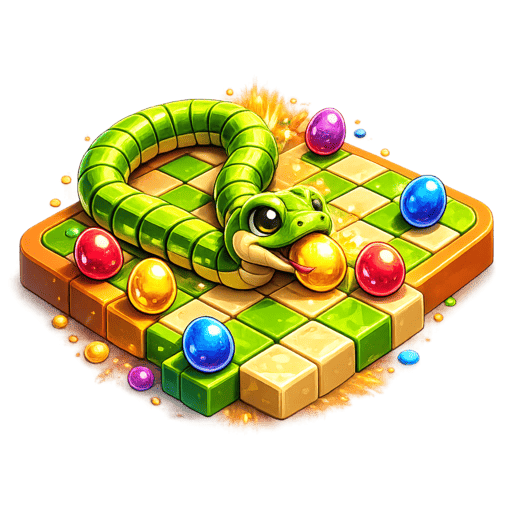
Snake 3D on Playtua represents this modern approach — faithful to the original concept with contemporary visual polish.
Why Snake Endures
Snake has survived for nearly 50 years because its design is mathematically perfect:
- Instantly understandable — anyone can grasp the rules in 3 seconds
- Infinitely scalable difficulty — as you eat more, the game gets harder automatically
- Self-imposed challenge — the snake (your progress) becomes your obstacle
- Clean feedback loop — eat, grow, navigate, repeat
- No randomness — your score is pure skill (unlike games with random elements)
These five qualities make Snake one of the most elegantly designed games in history. No tutorial needed. No onboarding. No explanation. You see the snake, you see the food, you understand.
Snake's Cultural Impact
Snake's influence extends far beyond gaming:
- Proved mobile gaming viable — Nokia Snake showed that phones could be gaming platforms, paving the way for the $92 billion mobile gaming industry
- Influenced game design — The "simple rules, emergent complexity" philosophy influenced countless modern games
- Created nostalgia — For an entire generation, Snake is synonymous with childhood and early mobile technology
- Academic interest — Snake has been studied in computer science for pathfinding algorithms and AI
Other Retro Classics on Playtua
If you love Snake's retro charm, these other Playtua games capture the same classic gaming spirit:
- Pac-Man — The 1980 arcade legend, faithfully recreated
- Flappy Bird — The 2014 phenomenon that echoed Snake's simplicity
- Dino Jump — Chrome's dinosaur game, available anytime
- Tank 1990 — The classic NES tank battle game
See all games in our full collection.
Keep Reading
Play Snake Today
The Nokia 6110 may be gone, but Snake lives on. Snake 3D on Playtua captures everything that made the original magical — simple controls, addictive gameplay, no distractions — with modern 3D visuals that look gorgeous on any smartphone.
No ads. No purchases. No internet required. Just you, the snake, and the food. Exactly as it should be.
📱 Download Playtua — App Store · Google Play — Play Snake 3D and 50+ other classic games, completely free.